Go to the U of M home page

Pages

Showing posts with label Film. Show all posts

Tuesday, March 18, 2014

Beyond Iberian Colonialism: One Day Conference


"Beyond Iberian Colonialisms: Spanish Arabs and the Fate of the Western Sahara"
Conference
Friday, April 4
9:00 a.m. - 4:00p.m.
Nolte 125
For more info please click here.

Key note speaker: Aminatou Haidar, "Saharawi Women and Peaceful Resistance"
2:15-3:15
Nolte 125

Film Screening of Sons of the Clouds: The Last Colony (Hijos de las nubes, la última colonia)(2012)
6:15 p.m.
St. Anthony Main Theater
As part of the Mpls/ST. Paul Film Society's International Film Fest
For tickets and more information click here.

K-16 Educator Workshop
Saturday, April 5
9:00 a.m.-2:00 p.m.
125 Nolte
For more information please click here.


Thumbnail image for Thumbnail image for Thumbnail image for Thumbnail image for Beyond Iberian Colonialisms_FINAL.jpg

This conference will illuminate and draw together the histories of Iberian colonialisms with the present realities of African immigration and cultural production. International scholars, poets and speakers will explore why contemporary poets from the Western Sahara write poetry in Spanish, what the conflict between contemporary Moroccan policy and human rights of Saharans has to do with Spain's colonial past, and why contemporary Iberian and American artists have rallied behind the Saharan cause.

Key note speaker Aminatou Haidar is a Saharawi human rights activist, an advocate of the independence of Western Sahara, and president of the Collective of Saharawi Human Rights Defenders (CODESA). Known as "Saharawi Gandhi" for her nonviolent protests, she was imprisoned from 1987 to 1991 and from 2005 to 2006 on charges related to her independence advocacy. In 2009, she attracted international attention when she staged a hunger strike after being denied re-entry into Moroccan-occupied Western Sahara. Haidar has won several international human rights awards for her work, including the 2008 Robert F. Kennedy Human Rights Award and the 2009 Civil Courage Prize. In 2012 she was nominated to the Nobel Peace Prize.

Sponsored by: Iberian Studies, the Institute for Global Studies, European Studies Consortium, The Imagine Grant Special Events Fund, Department of Spanish and Portuguese, African Studies Initiative, The Human Rights Program, Gender Women Sexuality Studies.

Monday, April 15, 2013

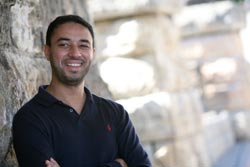
Hakim Abderrezak Convener of Burning the Sea

IMG_6287.jpg

Hakim Abderrezak is an Assistant Professor in the Department of French and Italian at the University of Minnesota, Twin Cities. His research deals primarily with Maghrebi literature and cinema, and Mediterranean Studies.

His most recent publications include an article on the topic of clandestine migration in francophone Moroccan "illiterature," an interview with Algerian writer Boualem Sansal, and a book chapter on the film Il était une fois dans l'oued (Once Upon a Time in the Oued). His work has appeared in various journals, such as Sites: Contemporary French and Francophone Studies, Critical Interventions, and The Journal of North African Studies.

He co-edited a special issue of Expressions Maghrébines on Plurilingualism in the Maghreb (Winter 2012). His forthcoming book is entitled Ex-Centric Migrations: Europe and the Maghreb in Mediterranean Cinema, Literature, and Music (Indiana University Press 2014).

Special Screening: Mama Illegal

Tuesday, April 23
7:00 PM
St. Anthony Main Theatre
Cost: $10.00-$12.00
For tickets click here.

flyer.jpg

Mama Illegal is a documentary by award-winning ÖRF journalist Ed Moschitz chronicles seven years in the lives of three women.

Aurica, Raia and Natasa leave their Moldovan village--and the broken roads, the dilapidated schools and the countless abandoned houses--to work in Austria or Italy as cleaners or child care workers. Here they live a life in the underground without valid documents, without health care, and separated from their children and families for years. They send the little that remains of their hard-earned Western money home to their families.

But their desire for a brighter future and a better life comes at a high price: After all these years, their return is not what they planned. Their children are grown and their husbands estranged. The social gulf that they sought to overcome threatens to tear apart the families once and for all. Having never really arrived and been accepted in the West, they find that they have become alienated from their homeland.

The Center for Austrian Studies' BMWF Research Fellow Matthias Falter will lead a discussion after the film.

Sponsored by: Center for Austrian Studies, European Studies Consortium, Institute for Global Studies, Immigration History Research Center, MSP International Film Festival

Tuesday, March 5, 2013

Special Film Screening "About a Village: Children of the High Woods"

Screening and discussion with director John Swanson, professor, department of History, University of Tennessee at Chattanooga
Tuesday, March 12
7:00 PM
Room 710 Social Sciences Building

190024659_640.jpg

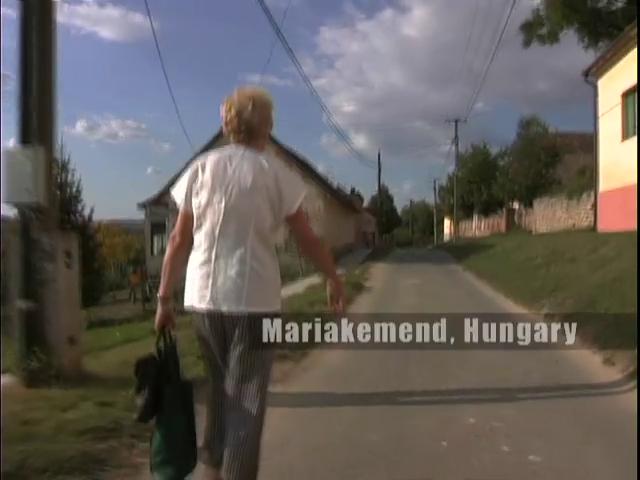
The Center for Austrian Studies will host producer, writer and director John Swanson, whose film About a Village: Children of the High Woods, examines the meaning of home.


Where is one's true home? For Elsa Koch and her circle of friends this question is more complicated than for most of us. Born in a German-speaking village in southern Hungary, they were forced to leave after the Second World War, still children. Although they eventually succeeded in building their lives in post-war Germany, the transition was not easy. Having been expelled from Hungary as Germans--a measure sanctioned by the Allies in 1945--they were regarded as outsiders in Germany as well, often referred to as 'Hungarian Gypsies.'
They had to suddenly become adults when they did not yet feel ready for it. No wonder that the small Hungarian village keeps occupying a special place in their hearts. They yearn for the uncomplicated world of their childhoods, where their lives were mapped out by the village streets and nothing could penetrate their sphere of joy and playfulness, not even the cruelties of war and politics. Is that world gone forever or have they managed to hold onto it throughout the past six decades? Is it in fact a physical place or more of an inner landscape?
About a Village: Trailer
Sponsored by: Austrian Studies, European Studies Consortium, Institute for Global Studies, Immigration History Research Center.

Thursday, November 1, 2012

Special Film Screening Demande à ton Ombre (Ask Your Shadow)

Special Film Screening
Demande à ton Ombre
(Ask Your Shadow)
with film director Lamine Ammar-Khodja
Wednesday, November 7
4:30 p.m.

St. Anthony Main Theatre
115 SE Main Street, Minneapolis
Tickets available by visiting: www.mspfilmsociety.org

Eight years after leaving native Algeria for France, Lamine Ammar-Khodja decides to end his exile on January 6, 2011, the day major riots break out in Algiers. Organized chronologically, the film is a first-person narrative dealing with the difficulties of getting back home. Because this journey isn't only a private matter, but also an opportunity to go back over Algeria's recent history, at a time when it could have taken another major turn.

Film discussion with director Lamine Ammar-Khodja and professor Patricia Lorcin, Department of History, University of Minnesota will follow the screening.