Go to the U of M home page

Pages

Tuesday, April 2, 2013

Burning the Sea: Clandestine Migration in the Age of Globalization Symposium


Burning the Sea: Clandestine Migration in the Age of Globalization
Symposium
Friday and Saturday, April 19-20, 2013
Nolte Center
Rooms 140 &125
Friday, April 19, 9:00-5:00
Saturday, April 20, 10:00-2:30
Free and open to the public. Reservations required, to reserve please click here.


Thumbnail image for BEST_burning the sea 002.jpgAccounts of North- and Sub-Saharan African clandestine migrations to Europe are broadcast widely in print and electronic media. Concurrently, fictional accounts on the matter published in French, Spanish, and Italian have grown considerably. Though they have received extensive media coverage, the desperate crossings have garnered little academic attention.

"Burning the Sea: Clandestine Migrations in the Age of Globalization" is a symposium designed as an interdisciplinary conference that will bring together fifteen scholars from various national and international institutions, with a wide range of disciplines in the humanities and social sciences. Panelists will discuss contemporary clandestine human migratory flows across the Mediterranean Sea between southwestern Europe and North- and Sub-Saharan Africa, as they are represented in French, Francophone, and Spanish literature and cinema. Panels will also examine these migratory patterns, concentrating on how they are accounted throughout history, in mass media, and political discourse.

Sponsored by: University of Minnesota Imagine Fund Special Events Programs,
European Studies Consortium, Institute for Global Studies, Immigration History Research Center, Interdisciplinary Center for the Study of Global Change, Department of French and Italian, Institute for Advanced Studies, Department of Spanish and Portuguese, Department of History, Humphrey School of Public Affairs.

Painting: Burning the Sea (2013) Jordan Kammer

Center for Holocaust & Genocide Studies announces a symposium on genocide

Representing Genocide: Media, Law and Scholarship
April 5 & 6, 2013
Place TBD

img004.jpg

The symposium will address journalistic, judicial and social scientific depictions of atrocities with a focus on cases of the Holocaust, Darfur, and Rwanda. It seeks to explore the intersections between these different discursive fields and case studies to shed light on the increasing tension between the local and global representations and memories of mass murder.

The particular ways in which current genocides are represented have critical consequences for the responses and interventions offered by the rest of the world. This has been evident in both Darfur and Rwanda, where the framing of the events and the labels and definitions used by the media and scholarship to describe them (such as "tribal violence") had a detachment effect and did not favor any sort of intervention to halt the atrocities. Reversely, references to the Holocaust in the representation of contemporary mass atrocities--so-called "metaphorical bridging"--can also crucially impact the process of intervention, as the case of Bosnia has demonstrated.
Few attempts have been made to specifically highlight the connection between representations of past mass atrocities and their actual impact on unfolding events of mass violence. An examination of this urgent question is an essential component of global progress towards human rights goals and the prevention or reduction of future political violence. Moreover, while there is an important body of work on Holocaust memory as such, the symposium will explore when and how promoting public awareness and memory of mass atrocities through distinct institutions (the media, the judiciary and academic scholarship) can lead to effective anti-genocide policies.
For complete listing of participating scholars and sponsors please click here to visit the CHGS web page on the symposium.

Friday, March 15, 2013

The Great Eurozone Disaster: From Crisis to Global New Deal

A lecture by Heikki Patomäki
Friday, March 29, 2013
1:00 p.m.
Room 614 Social Sciences
Refreshments served

The historical development and functioning of global financial system,
the 2008-2009 crisis, and the European debt crisis that started in 2010 have been tightly intertwined. The Euro crisis is, in essence, a second phase of the epic recession that began in 2008. Moreover, the ideological underpinnings or inherent contradictions of the European Monetary Union (EMU) are not specific to the EMU only. Similar ambiguities and imbalances characterize also the dynamics of global political economy as a whole.

In his lecture, Professor Patomäki argues first that the Euro crisis requires
reforms in the systems of global governance; and second that this
conclusion should be generalized from a non-Eurocentric perspective,
presupposing also a new global imaginary of ethics and politics.


Heikki Patomäki is Professor of World Politics at the University of Helsinki, Finland and a founding member of NIGD (Network Institute for Global Democratization) He is also an activist in the international ATTAC (Association for the Taxation of financial Transactions and Aid to Citizens) movement and currently chairing ATTAC Finland.
His research interests include philosophy and methodology of social sciences, peace research, futures studies, economic theory, global political economy, and global political theory.
His most recent book is The Great Eurozone Disaster: From Crisis to Global New Deal (Zedbooks, March 2013).
Sponsored by The Government of Finland/David and Nancy Speer Visiting Professorship, European Studies Consortium, Department of Political Science, Institute for Global Studies.

Tuesday, March 5, 2013

Special Film Screening "About a Village: Children of the High Woods"

Screening and discussion with director John Swanson, professor, department of History, University of Tennessee at Chattanooga
Tuesday, March 12
7:00 PM
Room 710 Social Sciences Building

190024659_640.jpg

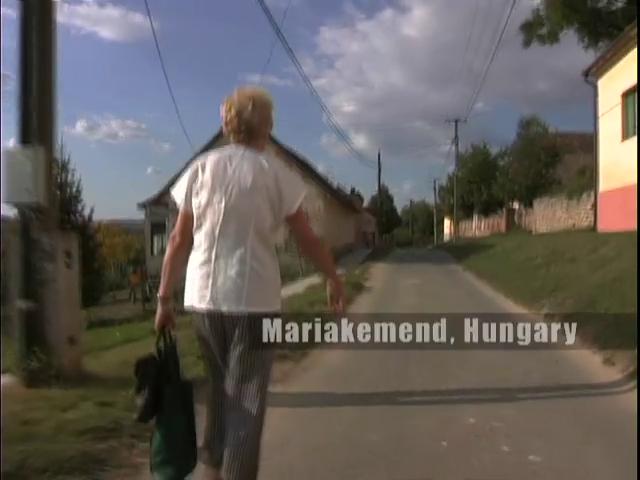
The Center for Austrian Studies will host producer, writer and director John Swanson, whose film About a Village: Children of the High Woods, examines the meaning of home.


Where is one's true home? For Elsa Koch and her circle of friends this question is more complicated than for most of us. Born in a German-speaking village in southern Hungary, they were forced to leave after the Second World War, still children. Although they eventually succeeded in building their lives in post-war Germany, the transition was not easy. Having been expelled from Hungary as Germans--a measure sanctioned by the Allies in 1945--they were regarded as outsiders in Germany as well, often referred to as 'Hungarian Gypsies.'
They had to suddenly become adults when they did not yet feel ready for it. No wonder that the small Hungarian village keeps occupying a special place in their hearts. They yearn for the uncomplicated world of their childhoods, where their lives were mapped out by the village streets and nothing could penetrate their sphere of joy and playfulness, not even the cruelties of war and politics. Is that world gone forever or have they managed to hold onto it throughout the past six decades? Is it in fact a physical place or more of an inner landscape?
About a Village: Trailer
Sponsored by: Austrian Studies, European Studies Consortium, Institute for Global Studies, Immigration History Research Center.

Call for Applications Badzin Graduate Fellowship in Holocaust and Genocide Studies

The Center for Holocaust and Genocide Studies and the Department of History, University of Minnesota Announce a Call for Applicants for the Bernard and Fern Badzin Graduate Fellowship in Holocaust and Genocide Studies.

The Fellowship is for the 2013-2014 academic year.

The Badzin Fellowship will pay a living stipend of $18,000, and the cost of tuition, mandatory fees and health insurance.

Eligibility: An applicant must be a current student in a Ph.D. program in the College of Liberal Arts, currently enrolled in the first, second, third, or fourth year of study, and have a doctoral dissertation project in Holocaust and genocide studies. The fellowship will be awarded on the basis of the quality and scholarly potential of the dissertation project, the applicant's quality of performance in the graduate program, and the applicant's general scholarly promise.

Required application materials:
1) A letter of application (maximum 4 pages single-spaced) describing the applicant's intellectual interests and dissertation research and the research and/or writing which the applicant expects to do during the fellowship year
2) A current curriculum vitae for the applicant
3) An unofficial transcript of all graduate work done at the University of Minnesota
4) TWO confidential letters of recommendation from U of MN faculty, discussing the quality of the applicant's graduate work and dissertation project and the applicant's progress toward completing the degree, sent directly to the Center for Holocaust and Genocide Studies (chgs.umn.edu).

All application materials must be received by the Center for Holocaust and Genocide Studies electronically chgs.umn.edu, no later than 3:00 pm on Friday, March 15, 2013.

The awardee will be announced no later than Friday, April 26, 2013.

Tuesday, February 5, 2013

Deadline for 2013-2014 in European and International Studies is February 15, 2013.

The Institute for Global Studies of the University of Minnesota is accepting nominations for the 2013-2014 Fellowship in European and International Studies, Foreign Language and Area Studies (FLAS).

The competition is open to undergraduate, graduate and professional students to promote the study of modern foreign languages and in particular less-commonly-taught languages in European and International studies.

Summer Fellowships provide $2500 living stipend and $5000 towards tuitions and fees for undergrads, graduate and professional students. Academic Fellowships provide undergraduates with a $5000 living stipend and $10,000 towards tuition and fees. A $15,000 living stipend and $18,000 towards tuition and fees is available for graduate and professional students.

The deadline for applications is February 15, 2013 by 4:30 p.m. Eligibility, complete details and nomination forms for both the international and European competitions are available by clicking here.

Informational meetings are scheduled for Monday, November 12 from 12-1 p.m. in room 18 Follwell Hall, Friday, November 16 from 12-1 p.m. in room 60 Humphrey Center (emphasis on professional students), Wednesday, November 28 from 10-11 a.m. in room 614 Social Sciences (emphasis on graduate students), and Thursday, November 29 from 10-11 a.m. in room 35 Nicholson Hall (emphasis on undergraduate students). The meetings will provide students information on eligibility, priorities and strategies for successful applications. Refreshments will be served and interested applicants are welcome to all meetings times.

Candidates for Director of Center for Austrian Studies to Present

Candidates for Director of CAS

Center for Austrian Studies is conducting a search for a new director and has invited four finalists to campus. Each candidate will give a presentation on their current research and a talk outlining their vision for the future of the Center. Dates, times, and locations are listed on the CAS website.

All members of the university community and the public are welcome.