Office hours have been established to aid students and department personnel in navigating the nominating procedures for FLAS. Beginning Thursday, November 14, hours will be available between 10:30 a.m. and 11:30 a.m. Tuesdays and Thursdays. Walk-ins are welcome; appointments are encouraged. Please email Jodi Elowitz at elow0001@umn.edu to set up an appointment. Hours will take place in room 248 Social Sciences Building.
2014-2015 Fellowship in European and International Studies, Foreign Language and Area Studies (FLAS) competition is open to undergraduate, graduate and professional students to promote the study of modern foreign languages and in particular less-commonly-taught languages in European and International studies.
Summer Fellowships provide a $2500 living stipend and $5000 towards tuitions and fees for undergrads, graduate and professional students. Academic Year Fellowships provide undergraduates with a $5000 living stipend and $10,000 towards tuition and fees. A $15,000 living stipend and $18,000 towards tuition and fees is available for graduate and professional students.
Eligibility, information and complete details for both international and European competitions are available online by clicking here.
A new online procedure for handling nominations is being put into place and will be announced soon. 2014-2015 Academic Year FLAS awards will be contingent on available funding from the U.S. Department of Education.
Monday, November 11, 2013
Monday, November 4, 2013
Finalists for director at Center for Austrian Studies to present
Three finalists for the position of permanent director for the Center for Austrian Studies will be making presentations on the University of Minnesota campus in November.
Howard Louthan, history, University of Florida. "Erasmus, Poland, and the Reformation." Thursday, November 7, 1:30-3:00 p.m., 1210 Heller Hall. "A Vision for the Future of CAS," Friday, November 8, 12:00-1:15 p.m., 614 Social Sciences Building.
Daniel Unowsky, history, University of Memphis. "Local Violence and State Crisis: The 1898 Anti-Jewish Riots in Habsburg Galicia." Tuesday, November 19, 3:30-5:00 p.m., 1210 Heller Hall. "A Vision for the Future of CAS," Wednesday, November 20, 12:00-1:15 p.m., 614 Social Sciences Building.
Egbert Klautke, cultural history, School of Slavonic and East European Studies, University College, London. "A Vision for the Future of CAS," Thursday, November 21, 12:00-1:15 p.m., 614 Social Sciences Building. for "The Descent of Freud: On the Reception and Popularization of Freudianism in Europe and America, c. 1930-1990." Friday, November 22, 2:00-3:30, 1210 Heller Hall.
Howard Louthan, history, University of Florida. "Erasmus, Poland, and the Reformation." Thursday, November 7, 1:30-3:00 p.m., 1210 Heller Hall. "A Vision for the Future of CAS," Friday, November 8, 12:00-1:15 p.m., 614 Social Sciences Building.
Daniel Unowsky, history, University of Memphis. "Local Violence and State Crisis: The 1898 Anti-Jewish Riots in Habsburg Galicia." Tuesday, November 19, 3:30-5:00 p.m., 1210 Heller Hall. "A Vision for the Future of CAS," Wednesday, November 20, 12:00-1:15 p.m., 614 Social Sciences Building.
Egbert Klautke, cultural history, School of Slavonic and East European Studies, University College, London. "A Vision for the Future of CAS," Thursday, November 21, 12:00-1:15 p.m., 614 Social Sciences Building. for "The Descent of Freud: On the Reception and Popularization of Freudianism in Europe and America, c. 1930-1990." Friday, November 22, 2:00-3:30, 1210 Heller Hall.

Monday, October 7, 2013
The Book that Changed Europe
Picart and Bernard's Religious Ceremonies of the World, with author Wijnand Mijnhardt
Center for Early Modern History Book Discussion
Friday, October 18
12:15 p.m.
James Ford Bell Library Wilson Library

Wijnand Mijnhardt, of the Descartes Centre for the History and Philosophy of the Sciences and Humanities at Utrecht University, will lead a discussion of his book The Book that Changed Europe: Picart and Bernard's Religious Ceremonies of the World.
This event is co-sponsored by the Center for Early Modern History, the James Ford Bell Library, the Program in the History of Science, Technology, and Medicine, and the European Studies Consortium.
Center for Early Modern History Book Discussion
Friday, October 18
12:15 p.m.
James Ford Bell Library Wilson Library

Wijnand Mijnhardt, of the Descartes Centre for the History and Philosophy of the Sciences and Humanities at Utrecht University, will lead a discussion of his book The Book that Changed Europe: Picart and Bernard's Religious Ceremonies of the World.
This event is co-sponsored by the Center for Early Modern History, the James Ford Bell Library, the Program in the History of Science, Technology, and Medicine, and the European Studies Consortium.
Muddle in the Med: the euro crisis and beyond
Friday, October 18
9:00 a.m.
100 Murphy Hall
Free and open to the public, to reserve a space please click here.

John Hooper, the Southern Europe Editor of the Guardian and Italy Correspondent of the Economist, asks whether the euro crisis is really over -- and looks at some of the other issues arising in what Europeans till recently thought of as their playground.
This event will be hosted by Giovanna Dell'Orto, assistant professor at the University of Minnesota School of Journalism & Mass Communication. On September 26, 2013 her new book Reporting at the Southern Borders: Journalism and Public Debates on Immigration in the U.S. and the E.U. will be published and includes a chapter written by Hooper.
This event is co-sponsored by the European Studies Consortium and the Department of Spanish/Portuguese.
9:00 a.m.
100 Murphy Hall
Free and open to the public, to reserve a space please click here.
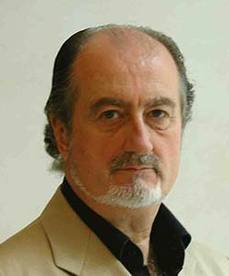
John Hooper, the Southern Europe Editor of the Guardian and Italy Correspondent of the Economist, asks whether the euro crisis is really over -- and looks at some of the other issues arising in what Europeans till recently thought of as their playground.
This event will be hosted by Giovanna Dell'Orto, assistant professor at the University of Minnesota School of Journalism & Mass Communication. On September 26, 2013 her new book Reporting at the Southern Borders: Journalism and Public Debates on Immigration in the U.S. and the E.U. will be published and includes a chapter written by Hooper.
This event is co-sponsored by the European Studies Consortium and the Department of Spanish/Portuguese.
Wednesday, August 14, 2013
Special Screening of The Sami
The Sami
Thursday, August 29
6:00 PM - 8:00 PM
All My Relations Art Gallery
1414 East Franklin Avenue Minneapolis, MN 55404
This event is free and open to the public.

Being Sami no longer means making a living by herding reindeer in the far northern reaches of Norway, Sweden, Finland and Russia. In a Finnish documentary, The Sami (Sapmelas) many Sami who have followed work to the big cities of northern Europe reflect on changes they have experienced within their lifetimes, as they have become musicians, store clerks, a film director, a school kid, an artist, a young mother, and, as a counterpoint, a couple engaged in traditional reindeer-herding.
Co-directors Anastasia Lapsui (a radio journalist in Salekhard, and part of a Nenets language program) and Markku Lehmuskallio (Seven Songs from the Tundra, 1999, Mothers of Life, 2001, and A Bride of the Seventh Heaven, 2004) explore the Sami diaspora, ask if the change of life-style and surroundings has transformed the uniquely Sami way of looking at the world. Sami speak candidly of what "being Sami" means to them, in ways that show the adaptiveness of tradition despite the hardships
The film will be screened in Sami, Finnish and Swedish with English subtitles.
After the film we will have discussion and Q&A with two leading Sami scholars from Finland. Professor Veli-Pekka Lehtola (University of Oulu) has authored 12 books and about 70 scientific articles on the history of the Sami and Lapland and on contemporary Sami art. Dr. Irja Seurujärvi-Kari is a lecturer and the director of multidisciplinary Sami studies program at the University of Helsinki. In addition to her academic career, Seurujärvi-Kari has been a member of the Sami Parliament.
Sponsored by: The Institute for Global Studies, All My Relations Art Gallery, The American Swedish Institute, Government of Finland/David and Nancy Speer Visiting Professorship in Finnish Studies, European Studies Consortium
Thursday, August 29
6:00 PM - 8:00 PM
All My Relations Art Gallery
1414 East Franklin Avenue Minneapolis, MN 55404
This event is free and open to the public.
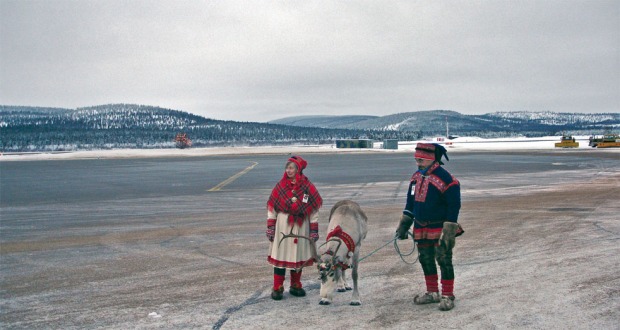
Being Sami no longer means making a living by herding reindeer in the far northern reaches of Norway, Sweden, Finland and Russia. In a Finnish documentary, The Sami (Sapmelas) many Sami who have followed work to the big cities of northern Europe reflect on changes they have experienced within their lifetimes, as they have become musicians, store clerks, a film director, a school kid, an artist, a young mother, and, as a counterpoint, a couple engaged in traditional reindeer-herding.
Co-directors Anastasia Lapsui (a radio journalist in Salekhard, and part of a Nenets language program) and Markku Lehmuskallio (Seven Songs from the Tundra, 1999, Mothers of Life, 2001, and A Bride of the Seventh Heaven, 2004) explore the Sami diaspora, ask if the change of life-style and surroundings has transformed the uniquely Sami way of looking at the world. Sami speak candidly of what "being Sami" means to them, in ways that show the adaptiveness of tradition despite the hardships
The film will be screened in Sami, Finnish and Swedish with English subtitles.
After the film we will have discussion and Q&A with two leading Sami scholars from Finland. Professor Veli-Pekka Lehtola (University of Oulu) has authored 12 books and about 70 scientific articles on the history of the Sami and Lapland and on contemporary Sami art. Dr. Irja Seurujärvi-Kari is a lecturer and the director of multidisciplinary Sami studies program at the University of Helsinki. In addition to her academic career, Seurujärvi-Kari has been a member of the Sami Parliament.
Sponsored by: The Institute for Global Studies, All My Relations Art Gallery, The American Swedish Institute, Government of Finland/David and Nancy Speer Visiting Professorship in Finnish Studies, European Studies Consortium
Wednesday, July 31, 2013
Workshop and Lectures with Jacques Rancière
Click here for full schedule.

Philosopher Jacques Rancière is among the preeminent contemporary thinkers of the intersection between politics and aesthetics, including questions of social history, political participation, education, cinema, literature, modernity and human rights. Among his latest of more than fifteen books to be translated into English are Aisthesis: Scenes from the Aesthetic Regime of Art (Verso, 2013), and Béla Tarr: The Time After (Univocal, 2013). His books also include The Future of the Image (Verso, 2007) and Film Fables (Berg, 2006).
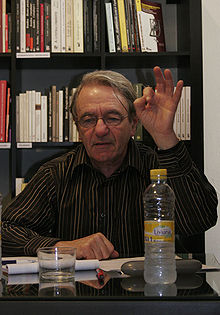
Philosopher Jacques Rancière is among the preeminent contemporary thinkers of the intersection between politics and aesthetics, including questions of social history, political participation, education, cinema, literature, modernity and human rights. Among his latest of more than fifteen books to be translated into English are Aisthesis: Scenes from the Aesthetic Regime of Art (Verso, 2013), and Béla Tarr: The Time After (Univocal, 2013). His books also include The Future of the Image (Verso, 2007) and Film Fables (Berg, 2006).
The Discovery of the "New World" and Traditions of Othering
A lecture by Pedro Martínez García
September 20, 2013
Room 1210 Heller Hall
12:15 p.m.
The arrival of the Castilian caravels in 1492 on the coast and islands which at first sight were identified as the Orient and the resulting encounters with the first natives oddly coincides with the end of the so called "coexistence of the three cultures" in the kingdoms of the Iberian Peninsula. Contemporary Christian Castilians set aside their Jewish and their Morisco others to engage with "new others" in unchartered territories, where concepts like conversion, conquista and cohabitation evolved and were adapted to new contexts. This moment is often considered a symbolic turning point between the Middle Ages and Modernity.
In his talk, Dr. Martinez will focus on the traditions of othering in the early modern Iberian Atlantic World, paying special attention to the European perceptions of the natives of the "New World" through chronicles and travel narratives.
Pedro Martínez García is a lecturer in the Chair of Early modern History, University of Bayreuth, Germany.
Since 2008, he has been writing his dissertation entitled "Face to Face with the Other: Travel Narratives and Alterity from the Late Middle Ages to the Early Modern Period"
at the University of Valladolid (Spain) and the University of Bayreuth (Germany).
Sponsored by: Center for Holocaust and Genocides Studies, Center for Early Modern History, Department of Spanish and Portuguese, European Studies Consortium.
September 20, 2013
Room 1210 Heller Hall
12:15 p.m.
The arrival of the Castilian caravels in 1492 on the coast and islands which at first sight were identified as the Orient and the resulting encounters with the first natives oddly coincides with the end of the so called "coexistence of the three cultures" in the kingdoms of the Iberian Peninsula. Contemporary Christian Castilians set aside their Jewish and their Morisco others to engage with "new others" in unchartered territories, where concepts like conversion, conquista and cohabitation evolved and were adapted to new contexts. This moment is often considered a symbolic turning point between the Middle Ages and Modernity.
In his talk, Dr. Martinez will focus on the traditions of othering in the early modern Iberian Atlantic World, paying special attention to the European perceptions of the natives of the "New World" through chronicles and travel narratives.
Pedro Martínez García is a lecturer in the Chair of Early modern History, University of Bayreuth, Germany.
Since 2008, he has been writing his dissertation entitled "Face to Face with the Other: Travel Narratives and Alterity from the Late Middle Ages to the Early Modern Period"
at the University of Valladolid (Spain) and the University of Bayreuth (Germany).
Sponsored by: Center for Holocaust and Genocides Studies, Center for Early Modern History, Department of Spanish and Portuguese, European Studies Consortium.
Subscribe to:
Posts (Atom)